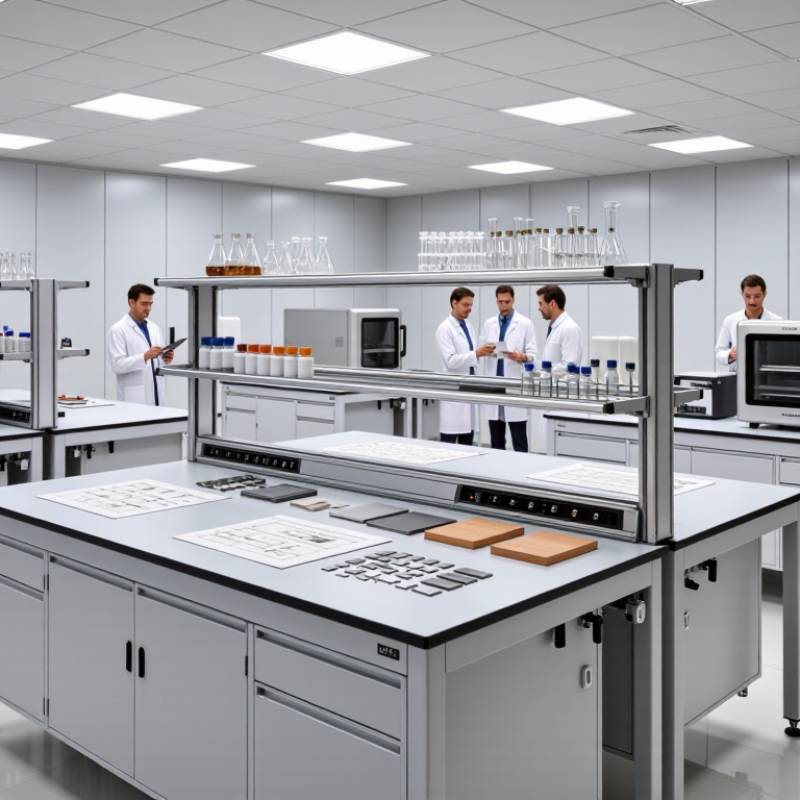
Choosing the right Lab Desk manufacturer in 2026 requires more than comparing glossy catalogs. Global buyers need evidence from real installations, technical drawings, material samples, and long-term service records. A desk may look precise under showroom lights, yet fail when exposed to solvent splashes, heavy instruments, or constant cable movement.
Allison Paradise, founder and CEO of My Green Lab, has said, “Scientists are some of the most trusted people in the world.” Her point matters here. Laboratory furniture must support trustworthy work through stable surfaces, safe ergonomics, durable finishes, and responsible production. The strongest manufacturers explain their materials clearly. They also provide load ratings, warranty terms, replacement-part policies, and installation guidance for different regions.
This guide examines leading Lab Desk manufacturers for international buyers. It considers frame strength, chemical resistance, height adjustment, seismic options, cleanability, and modular design. It also reviews delivery capability, technical support, certification documents, and customization experience. Details matter. A 1.2-meter desk may suit a compact testing room, while a 2.4-meter island requires stronger reinforcement and careful floor planning.
No ranking is perfect.
Manufacturing quality can vary between batches. Regional distributors may also change the buying experience. Price alone can mislead, especially when freight, assembly, taxes, and replacement parts are added later. Buyers should request current samples and written specifications before placing large orders. This introduction sets a practical foundation for comparing reputable suppliers, while acknowledging that every laboratory has different risks, workflows, budgets, and expectations.
A high-quality lab desk in 2026 must support safety, precision, and long working hours. EU-OSHA’s ESENER-2019 survey found repetitive hand or arm movements in about 65% of European workplaces. Prolonged sitting affected roughly 61%. These figures make height adjustment, adequate knee clearance, and comfortable working depth practical requirements. A desk should also resist common solvents, moisture, heat, and frequent disinfection. Surface choice matters. Compact laminate, epoxy resin, and stainless steel perform differently under chemical exposure. Ask for compatibility evidence, not broad marketing claims.
ANSI/BIFMA X5.5-2021 evaluates desk stability, strength, durability, and functional performance. Buyers should request test documentation and clear load ratings. Inspect welded joints, adjustable feet, sealed edges, cable routes, and underside access. A smooth rear upstand can prevent spills from reaching walls. In sensitive areas, verify grounding and ESD performance separately. A strong frame is useful, but vibration control may matter more beside analytical instruments. Small design errors become expensive during daily cleaning.
Tips: Place a sample desk in the actual room for one week. Test cleaning, posture, cable access, and instrument movement. Check the surface after repeated wiping. Also ask about spare parts and repair time. No checklist catches every failure. A cheaper desk may still win, but only after realistic testing.
Accessible work surfaces should provide a height between 711 and 864 mm, with at least 762 mm of knee-space width, 686 mm of knee-space height, and 483 mm of knee-space depth. These dimensional benchmarks support ergonomic access and inclusive laboratory planning. They should be evaluated together with chemical resistance, structural stability, load capacity, cleanability, and cable management.
Source: 2010 ADA Standards for Accessible Design, Sections 306 and 902. Values are converted from inches to millimetres.
Laboratory desks are workstations, not ordinary office tables. Their design should match the procedure, equipment, and cleaning routine. A 2024 Grand View Research analysis estimates continued growth in the laboratory furniture market through 2030. That trend reflects expanding research, testing, and healthcare facilities worldwide. Yet market growth does not make every desk suitable.
Fixed-height workbenches support balances, microscopes, and repeated analytical tasks. Mobile benches help teaching laboratories change layouts quickly. Height-adjustable desks suit documentation, sample review, and mixed seated-standing work.
Anti-vibration tables are essential near precision balances or sensitive imaging equipment. Wet-lab benches need chemical-resistant surfaces, raised service points, and controlled spill zones.
In contrast, dry-lab desks prioritize cable management, monitor depth, and ergonomic seating. Cleanroom desks require smooth joints and materials compatible with routine disinfection. Choose carefully.
The Occupational Safety and Health Administration emphasizes ergonomics, while ISO 14644 standards guide cleanroom control. These references influence height, clearance, airflow, and surface selection. A global buyer should also check local electrical and fire requirements before ordering.
I have seen specifications focus on appearance while ignoring drawer clearance and maintenance access. That mistake becomes expensive after installation.
Stainless steel can be durable, but it may create glare and noise. Compact layouts save floor space, though they can restrict movement during busy procedures.
The best desk is rarely the most impressive one.
2026 Top Lab Desk Manufacturers for Global Buyers
Leading lab desk manufacturers for international buyers should offer more than attractive catalog images. They need proven material knowledge, stable production, and clear export procedures. A reliable supplier can explain how a 1200 mm worktop handles daily equipment loads. They should also identify suitable surfaces, such as compact laminate, epoxy resin, or stainless steel. Ask for test reports, installation drawings, sample photos, and recent quality records. Details matter when desks must fit fume hoods, sinks, power modules, and narrow laboratory aisles.
Tips: Compare suppliers using the same specification sheet. Check edge sealing, frame adjustment, packaging strength, replacement parts, and expected lead times. Request a physical sample when color consistency matters. Confirm whether the quoted price includes pallets, documentation, and technical support. Small omissions can become expensive overseas.
International buyers should also review manufacturing capacity and communication habits. Factory audits, video inspections, and independent quality checks can reduce uncertainty. However, no manufacturer is perfect. A supplier may have excellent welding but weaker documentation. Another may respond quickly but lack flexible customization. This is where careful questioning helps. Ask how defects are recorded, how corrections are verified, and who supports installation after delivery. A thoughtful buyer should leave room for review, because the first specification is rarely complete. Steady evidence is more useful than confident promises.
| Laboratory Desk Category | Common Worktop Materials | Typical Worktop Thickness | Typical Overall Dimensions | Typical Static Load Capacity | Recommended Environment | Key Technical Requirements | Relevant International References | International Purchasing Considerations |
|---|---|---|---|---|---|---|---|---|
| General-purpose fixed laboratory bench | High-pressure compact laminate, phenolic resin, epoxy resin, or stainless steel | 16–30 mm | Length: 1,200–3,000 mm Depth: 600–900 mm Height: 750–900 mm |
250–500 kg per linear metre | Teaching laboratories, research rooms, quality-control areas, and sample preparation | Rigid welded or modular frame, chemical-resistant surface, adjustable levelling feet, rounded front edge, and sealed joints | EN 13150 for laboratory workbenches; applicable electrical and material-safety requirements in the destination market | Confirm load testing method, packaging dimensions, corrosion resistance, replacement parts, and installation instructions |
| Heavy-duty instrument bench | Epoxy resin, stainless steel, or reinforced compact laminate | 25–40 mm | Length: 1,500–3,600 mm Depth: 750–1,200 mm Height: 750–900 mm |
500–1,000 kg per linear metre | Analytical instruments, chromatography systems, environmental testing, and materials laboratories | Low-vibration frame, reinforced cross-members, high point-load resistance, cable routing, and equipment anchoring provisions | EN 13150 where applicable; instrument manufacturer installation requirements should also be reviewed | Request vibration data, concentrated-load test results, floor-loading requirements, and compatibility with local power systems |
| Height-adjustable laboratory desk | Compact laminate, phenolic resin, epoxy resin, or stainless steel | 16–30 mm | Length: 1,200–2,400 mm Depth: 600–900 mm Working height: approximately 650–1,250 mm |
150–300 kg per desk | Ergonomic laboratories, shared workspaces, microscopy, and flexible research rooms | Electric or manual height adjustment, anti-collision protection, stable lifting columns, overload protection, and cleanable controls | Applicable machinery, electrical safety, electromagnetic compatibility, and workplace ergonomics requirements | Verify voltage and plug configuration, duty cycle, lifting speed, noise level, warranty coverage, and spare actuator availability |
| Mobile laboratory workstation | Compact laminate, phenolic resin, stainless steel, or chemical-resistant laminate | 16–25 mm | Length: 900–1,800 mm Depth: 600–800 mm Height: 750–950 mm |
100–250 kg per unit | Multi-purpose laboratories, pilot areas, clean zones, and temporary testing stations | Lockable industrial casters, anti-tip design, braked wheels, protected service outlets, and low-maintenance surfaces | Applicable workplace safety, caster, electrical, and fire-performance requirements | Check wheel load rating, turning radius, floor compatibility, shipping protection, and stability when drawers are open |
| Wet-chemistry laboratory bench | Epoxy resin, ceramic tile, stainless steel, or chemically resistant phenolic resin | 20–40 mm | Length: 1,200–3,000 mm Depth: 750–900 mm Height: 750–900 mm |
250–500 kg per linear metre | Wet chemistry, formulation, sample digestion, and corrosive-liquid handling | Raised rear upstand, sealed sink integration, acid-resistant joints, spill containment, service voids, and corrosion-resistant hardware | EN 13150 where applicable; local plumbing, drainage, chemical-storage, and workplace-safety regulations | Specify chemical exposure list, sink and tap standards, drainage compatibility, water-pressure range, and replacement seals |
| Cleanroom laboratory desk | Stainless steel, powder-coated steel with sealed edges, or non-shedding compact laminate | 16–30 mm | Length: 900–2,400 mm Depth: 600–900 mm Height: 750–900 mm |
150–400 kg per linear metre | Controlled environments, pharmaceutical laboratories, medical-device production, and electronics testing | Flush surfaces, minimal particle traps, rounded corners, sealed tubular legs, low-shedding finishes, and cleanroom-compatible wheels if required | ISO 14644 series for cleanroom environments; destination-specific material and surface-cleanability requirements | Confirm cleanroom class, surface roughness, cleaning-agent compatibility, packaging cleanliness, and on-site decontamination procedure |
| ESD-protected laboratory workstation | Static-dissipative laminate, conductive laminate, stainless steel, or ESD-coated panels | 16–30 mm | Length: 1,200–2,400 mm Depth: 600–900 mm Height: 750–900 mm |
150–300 kg per desk | Electronics laboratories, sensor testing, semiconductor support, and precision assembly | Controlled surface resistance, common-point grounding, grounding cable, conductive accessories, and dissipative flooring compatibility | ANSI/ESD S20.20 and IEC 61340-5-1 for electrostatic-control programs | Request surface-resistance test range, grounding verification method, humidity assumptions, and compliance documentation |
| Teaching laboratory desk | Compact laminate, phenolic resin, high-pressure laminate, or epoxy resin | 16–25 mm | Length: 1,200–2,400 mm Depth: 600–750 mm Height: 750–900 mm |
150–300 kg per linear metre | Universities, schools, vocational laboratories, and training centres | Impact-resistant edges, easy-clean surfaces, cable management, optional service towers, and robust student-safe construction | EN 13150 where applicable; local educational-furniture, fire-safety, and accessibility requirements | Evaluate assembly time, classroom layout flexibility, spare-part supply, cleaning resistance, and bulk-shipment efficiency |
| Microscopy and precision observation desk | Epoxy resin, compact laminate, stainless steel, or vibration-damping composite | 25–50 mm | Length: 1,200–2,400 mm Depth: 750–1,000 mm Height: 700–900 mm |
200–500 kg per linear metre | Microscopy, metrology, life-science observation, and precision inspection | High rigidity, vibration isolation, stable levelling system, low-reflectance finish, and dedicated equipment cut-outs | Equipment-specific vibration and installation requirements; applicable laboratory furniture safety requirements | Ask for vibration-transmission data, floor sensitivity guidance, equipment-clearance drawings, and levelling tolerance |
| Laboratory desk with integrated storage | Phenolic resin, compact laminate, epoxy resin, or stainless steel | 16–30 mm | Length: 1,200–3,000 mm Depth: 600–900 mm Height: 750–900 mm |
200–450 kg per linear metre | Research laboratories requiring organized storage for tools, consumables, and non-hazardous samples | Adjustable shelves, soft-close hinges, lockable drawers, chemical-resistant interiors, anti-tip protection, and service-access panels | EN 14727 for laboratory storage units where applicable; local fire and chemical-storage regulations must be checked | Separate general storage from hazardous-material storage, verify cabinet load ratings, and confirm flat-pack or assembled delivery options |
| Modular island laboratory bench | Epoxy resin, phenolic resin, ceramic, compact laminate, or stainless steel | 20–40 mm | Length: 1,800–3,600 mm Width: 1,200–1,800 mm Height: 750–900 mm |
250–600 kg per linear metre | Open-plan laboratories, collaborative research spaces, and high-throughput sample preparation | Two-sided access, overhead service distribution, integrated sinks or power modules, reinforced base, and flexible module replacement | EN 13150 where applicable; local electrical, plumbing, accessibility, and laboratory safety requirements | Confirm room coordination drawings, floor-box locations, service connection points, seismic needs, and installation sequencing |

Selecting a lab desk manufacturer requires more than comparing catalog prices. Start with the working environment, not the product photograph. Phenolic resin suits many wet areas, while stainless steel supports frequent cleaning and heat exposure. Compact laminate can offer practical durability at a controlled cost. Ask for chemical-resistance data, load ratings, edge construction, and surface repair guidance. Measure twice.
Features should match daily workflows. Adjustable feet help stabilize desks on uneven floors. Cable ports, rear upstands, reagent shelves, and lockable storage can reduce clutter. Check whether drawers support the intended load and whether moving parts remain accessible after installation. A beautiful layout may still fail if users cannot clean behind it. Ask for evidence.
Compliance needs documented proof, not broad claims. Request material declarations, factory quality records, inspection reports, and relevant test methods. Electrical components should align with the destination market’s requirements. Fire, hygiene, emissions, and waste rules may also affect selection. Confirm who handles testing, labeling, delivery damage, and installation responsibility. Customization is valuable when it solves a measured problem, such as a 900-millimeter working height or a sink cutout for a specific instrument. However, every modification should receive a revised drawing and approval record. I have seen teams accept verbal promises, then discover costly gaps. That mistake is avoidable, though not always obvious. Compare samples, documentation, and after-sales response together.
Global buyers should compare the delivered cost, not the factory quotation alone. A desk priced at 420 dollars may exceed 700 dollars after packing, freight, insurance, customs, and local handling. Request a detailed pro forma invoice with material grades, dimensions, pallet count, and replacement-part prices. Ask for proof. Pricing becomes clearer when every assumption is written down.
Shipping performance deserves practical review. Confirm whether desks arrive flat-packed, assembled, or partially assembled. Check carton strength, moisture protection, and loading photographs before dispatch. A damaged worktop can delay an entire laboratory fit-out. That gap matters.
Buyers should also compare port-to-door options, estimated transit times, and procedures for concealed damage claims. Cheap freight is not useful when a project misses its installation window.
Installation support can separate a reliable manufacturer from a difficult supplier. Request illustrated manuals, hardware lists, video guidance, and remote technical assistance in your working language. For complex benches, ask whether trained installers or regional contractors are available.
Support should continue after delivery, with clear warranty terms and response targets. Some suppliers promise fast help but provide vague service channels. This deserves scrutiny.
Before signing, test the support team with a technical question and record the response time. A small pilot order may reveal packaging weaknesses, unclear instructions, or missing fittings before a large purchase exposes them.